


 Making Authentic Dashi Broth
 Cooking with Dashi as a Seasoning



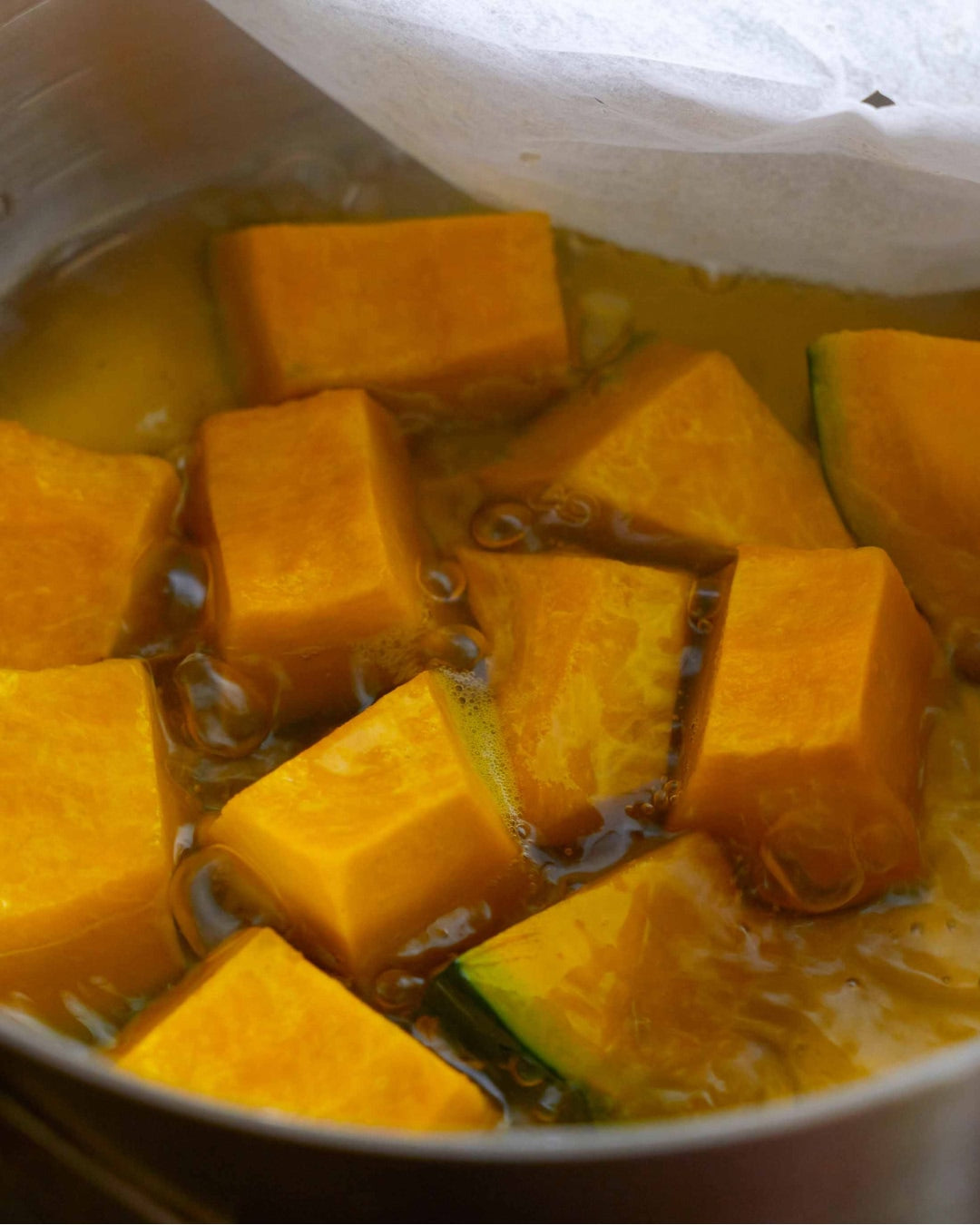

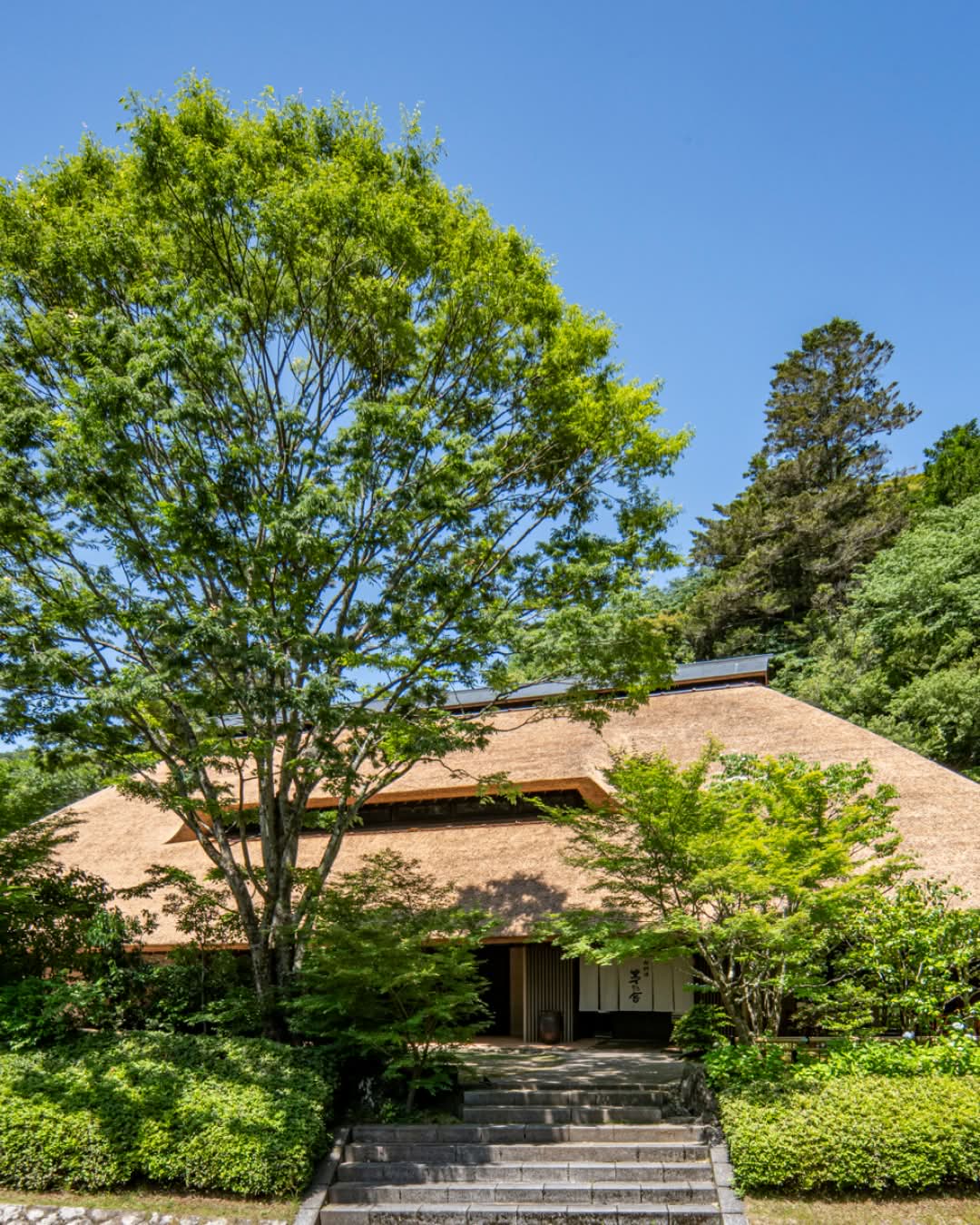

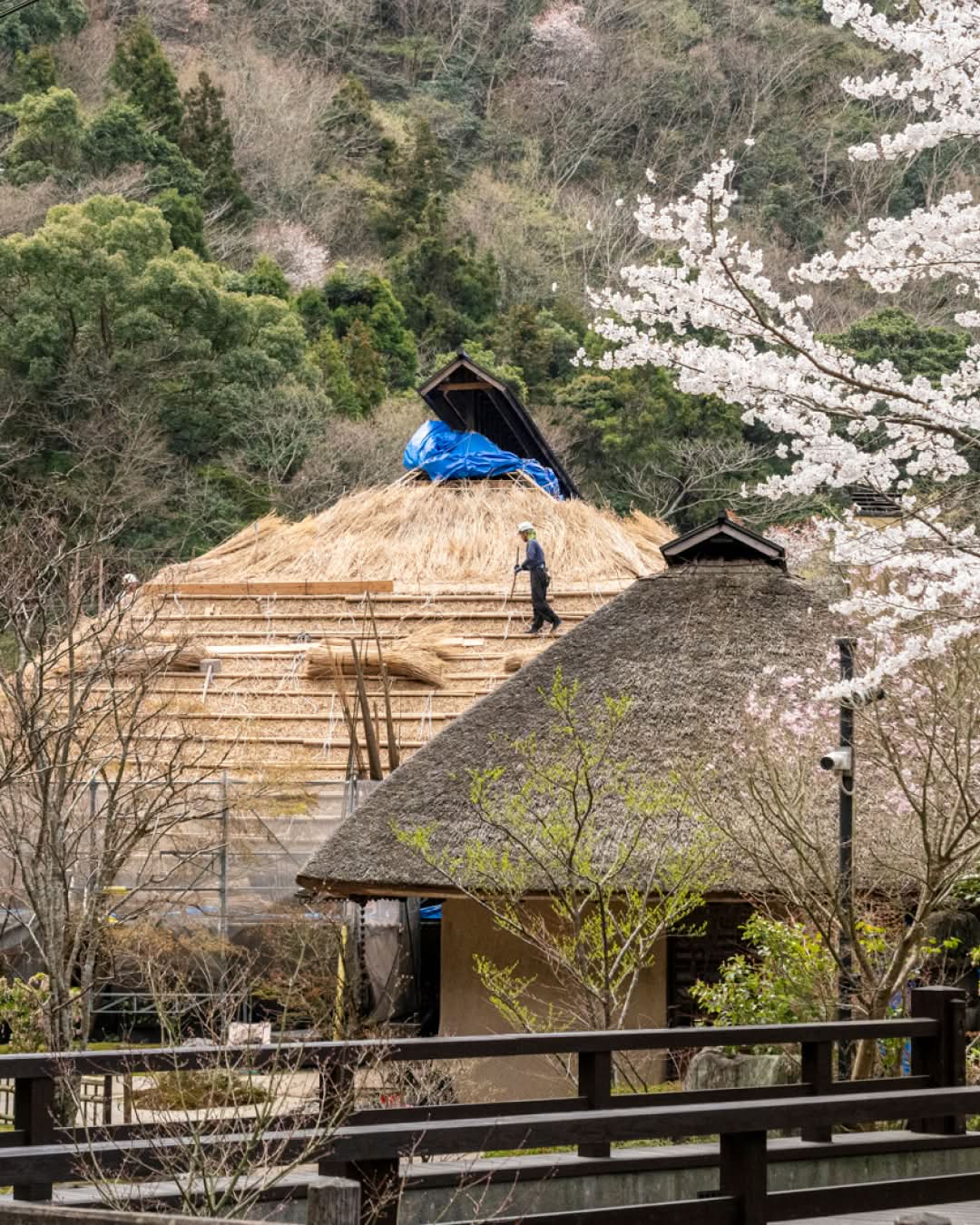






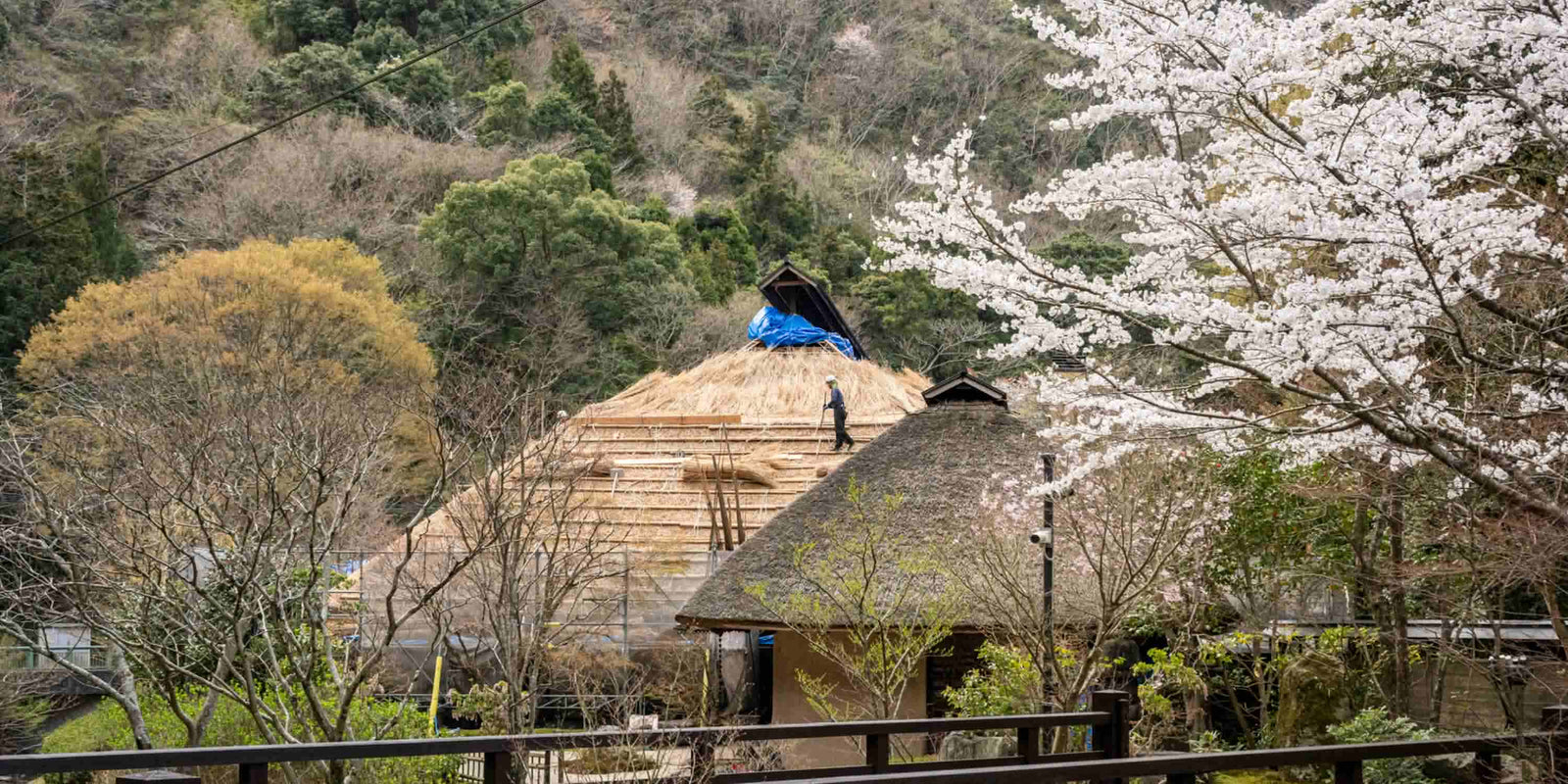

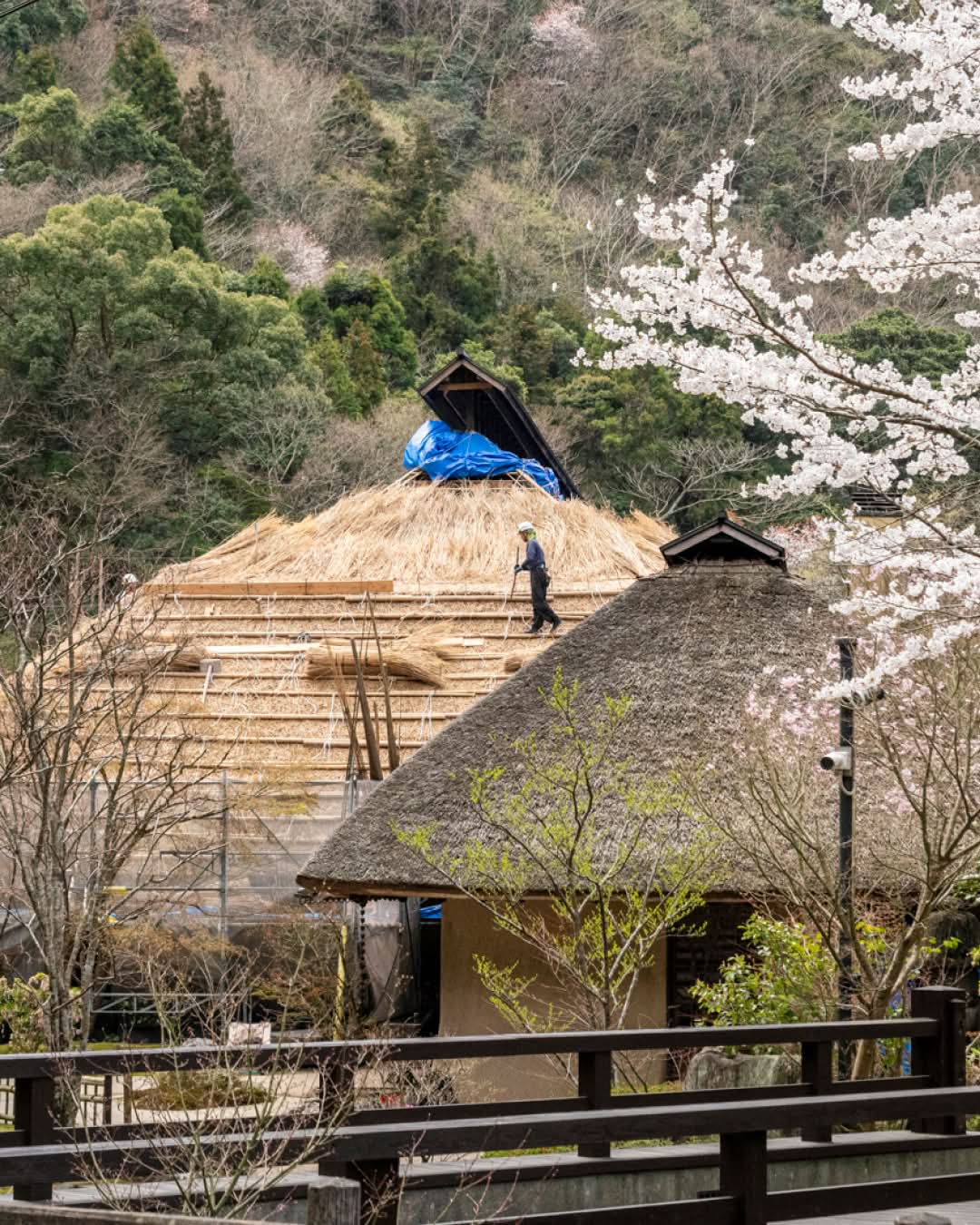

A Closer Look at the Re-Thatching of Oryori Kayanoya Dining

Twenty years after opening its doors in 2005, Oryori Kayanoya Dining in Hisayama, Fukuoka, successfully completed the re-thatching of its roof in late April 2025. The restaurant celebrated its grand reopening on June 19.
The re-thatching project lasted three and a half months—the first of its kind in Oryori Kayanoya Dining's history. It was also a rare sight in modern Japan. We followed the work of the master thatchers with care, hoping to help preserve the tradition of thatched roofing for future generations.
Master Thatcher Yoshihisa Mitoma

The re-thatching project was led by Yoshihisa Mitoma, chairman of Okuhitabiken, a company based in Hita, Oita Prefecture. He also worked as one of the thatchers when Oryori Kayanoya Dining was first built.
Still an active craftsman, Master Thatcher Yoshihisa Mitoma continues to work alongside the next generation of thatchers while passing on his skills and knowledge.
During the project, Mr. Mitoma celebrated his 88th birthday. Even at 88, he remained remarkably energetic, spending each day passing on his skills to a team of 15 craftsmen while continuing to climb onto the roof himself.
"Twenty years have passed since the last re-thatching. I want to pass on everything I've learned over those twenty years to this new roof," he says.

The team included craftsmen from Okuhitabiken, members of Aso Kaya Workshop, brothers working in Saga Prefecture, and even a craftsman who traveled from Kyoto.
They came not only to learn from Mr. Mitoma, but also for the rare opportunity to work on a thatched roof as large as Oryori Kayanoya Dining's.
Thatch Harvested from the Grasslands of Aso

Silver grass and wheat straw were used for this re-thatching.
Thatched roofs can be made from a variety of dried plant materials, including straw, reeds, rushes, and palm leaves.
The roof of Oryori Kayanoya Dining is primarily thatched with high-quality Japanese silver grass grown in the foothills of Mount Aso in Kumamoto Prefecture, an area renowned for producing excellent grass for thatching.
The quality of this grass varies depending on where it is grown. The finest grass has a beautiful sheen, and thatchers affectionately refer to it as “a beauty.”

Straight, supple silver grass from the foothills of Mount Aso—a true "beauty" in the eyes of master thatchers.
The surface of each stalk is covered with tiny hairs that naturally repel water. As a result, rain forms into droplets and rolls down the stalk instead of soaking in.
By contrast, a smooth plastic straw cannot shed water in the same way. It's one of the unique advantages of natural thatching grass.
From Grassland to Roof: Three Years in the Making
Planning for the re-thatching of Oryori Kayanoya Dining began around February 2022.
Because the project required 15,000 bundles of thatching grass—far more than could be gathered at once—the harvesting alone took three years.
The bamboo used for the roof's framework also required two years of drying after harvest. After years of preparation, a ceremony to pray for the safety of the project was held on January 7, 2025, on a bitterly cold day with light snow falling.
A week later, on January 15, work began to dismantle the old roof, with completion scheduled for the end of April.
Dismantling a Roof That Served for 20 Years

The thatch, laid 20 years ago, showed signs of age, with patches of moss and areas worn away by time.
 Even the dismantling was done entirely by hand.
The work began by carefully removing the thatch from the roof that had protected Oryori Kayanoya Dining from the elements for 20 years.
As the thatch was removed, the roof's underlying structure came into view, revealing wooden rafters and a lattice of bamboo beneath.

Thatching Notes 1: Why Thatched Roofs Are Sustainable
Even during dismantling, nothing goes to waste. Thatch that remains in good condition is carefully sorted by the craftsmen and reused as filling material inside the roof.
Older thatch is not discarded either. Instead, it is returned to tea fields, where it naturally decomposes and enriches the soil.
Today, Japan's thatching grasslands are becoming increasingly scarce, making thatch an especially valuable natural resource.
Replacing the Bamboo Framework

The original bamboo framework was replaced with new bamboo. The binding ropes were also changed to hemp, which is better suited to today's hotter and more humid climate.
The Thatching Begins at the Roof's Corners

Thatching the roof's corners.
A thatched roof is built from the bottom up. Normally, the process begins by thatching the roof's corners first.
Because the roof of Oryori Kayanoya Dining is exceptionally large, however, the corners and the straight sections were thatched simultaneously.
The corners are the most challenging part of the roof to thatch, so this work was entrusted to the most experienced craftsmen.
Thatching Notes 2: The Beauty of a Roof with Character
According to Mr. Mitoma, the corners of a thatched roof should have a soft, gently rounded shape.
From a distance, a well-crafted roof should not appear perfectly straight, but instead have subtle variations that give it character and a sense of life.
As they work, the craftsmen seek to honor the intentions of those who came before them, while also respecting the owner's vision for the building.


Only the second layer is thatched with shorter, golden wheat straw instead of silver grass, creating a subtle band of color beneath the eaves while helping build up the roof's edge.
Thatching Notes 3: The Gentle Lines of Oryori Kayanoya Dining's Roof
The roof of Oryori Kayanoya Dining has a gentle pitch of 42–43 degrees, slightly shallower than the 45-degree pitch commonly found on thatched roofs in Kyushu.
The roofs of Shirakawa-go's traditional gassho-zukuri farmhouses are even steeper, with a pitch of around 55 degrees.
The eaves at Oryori Kayanoya Dining are also unusually thick, measuring 28–29 in—about 4–8 in thicker than those of a typical thatched roof.

Starting at the Eaves
Once the roof's corners were completed, the craftsmen began thatching from the eaves, the lowest edge of the roof.
Most of the thatching grass was laid with the root end facing downward. After each bundle was carefully arranged, it was tied to the bamboo framework beneath and secured with another bamboo pole placed over the top to keep the thatch firmly in place.

The ropes should not simply be tied as tightly as possible. What matters is achieving just the right amount of tension.
Leaving a little give allows rainwater to flow smoothly off the roof, helping keep the thatching grass in good condition.

Thatching Notes 4: Handmade Tools
The tools used to shape the thatching grass are handmade by the craftsmen themselves. Some are treasured heirlooms, passed down from master thatchers or retiring senior craftsmen.
Among the team, it's often possible to recognize who is working simply by looking at their tools.
As they work, the rhythmic sound of the tools striking the thatch echoes across the roof.

This tool, called ryotezuki, is used to shape the flat sections of the roof. Its handle is made from a naturally curved tree branch, making it easier to strike the roof surface.

The striking face of the ryotezuki is grooved to subtly stagger the overlapping layers of thatching grass.
Building Upward, Layer by Layer

Once the lower section of the roof had been completed and the thick eaves were finished, the craftsmen began working upward toward the roof's ridge.
At Oryori Kayanoya Dining, the upward thatching begins with the seventh layer, following the six layers used to build the eaves.

On the right, the thatching has begun to work its way up the main roof. On the left, the eaves are still being built.
Working Toward the Roof's Ridge

Carrying large bundles of thatching grass by hand, the craftsmen make their way higher and higher up the roof.
The bundles come in two sizes—8 in and 12 in in diameter—and are heavy enough to challenge even the strongest craftsmen.

Layer after layer, the craftsmen carry the thatching grass up the roof, arrange it in place, and tie it to the bamboo framework. Repeating this process through 23 layers, they finally reach the roof's ridge.
Thatching Notes 5: Shaping Around the Dormer
Shaping the roof around the dormer requires exceptional skill. Like the roof's corners, it has a significant impact on the overall appearance of the roof, so every step is carried out with great care.
More durable cedar bark is also used in areas that are especially exposed to rain and moisture, such as around the chimney and beneath the ridge cap.

The area around the dormer is shaped with soft, graceful lines.

Cedar bark is laid beneath the ridge cap.
Adding the Final Layers

A little over three months after work began, on April 23, the thatching finally reached the roof's ridge. Only part of the cedar bark roofing remained to be completed.
Even then, the work was not yet finished. To create a stronger, more beautiful roof, the craftsmen carefully inspected the entire surface, adding thatching grass by hand wherever more was needed.
Shaping the Finished Roof
Even after the thatching is complete, the roof still has a rough, uneven surface.
The craftsmen then carefully trim the thatching grass by hand, gradually shaping it into its finished form.


The craftsmen use electric trimmers and pruning shears to shape the roof. The tips of the thatching grass are cut at an angle to combine efficient water runoff with a clean, beautiful appearance.
The trimmed thatching grass is then repeatedly tapped with the ryotezuki and homeita, carefully refining the roof's shape.
Thatching Notes 6: Tapping, Praising, and Finishing

This is the homeita, a wooden finishing tool with a handle on the back. It is used for the final finishing work, as well as for shaping the roof's corners and the area around the dormers.
Its name comes from the Japanese word homeru, meaning "to praise." According to the craftsmen, it was named after the tradition of tapping the roof while saying things like, "What beautiful thatch—keep becoming even more beautiful." It's a charming story behind the tool's name.

This is the hiragote, a tool used to tap the eaves into shape.
Using it requires the craftsmen to remain bent over while keeping their eyes fixed on the roof, tapping again and again. "It's hard work. The blood rushes to your head, and your back starts to ache," one craftsman says.
Thatching Notes 7: The Natural Shine of Thatching Grass
Like glass, thatching grass contains silica. This is why the surface of a newly finished roof sparkles so beautifully in the sunlight.
Over time, that natural sparkle gradually fades, making a newly thatched roof a truly special sight to behold.

April 29: Every Step Complete—Ready for the Next 20 Years
The re-thatching project, which began on January 15, was completed on April 29. As the newly thatched roof sparkled in the sunlight, everyone at Kayanoya felt both joy and a touch of sadness.
Watching the craftsmen at work and witnessing this centuries-old tradition up close had been an unforgettable experience.

It also reminded us that carrying on a tradition is about more than simply preserving the past. It means holding on to the commitment to create something truly good, while continually seeking better techniques and better ways of doing things.

Like the thatched roof of Oryori Kayanoya Dining, the cuisine served here and Kayanoya's dashi are all part of Japan's rich cultural heritage, passed down through generations. We hope to cherish that heritage, continue refining it, and pass it on to future generations.
As Master Thatcher Yoshihisa Mitoma says, "Nature, the thatched roof, warm hospitality, and delicious food all come together to create Oryori Kayanoya Dining." We hope this newly re-thatched roof will continue to be part of the warm welcome that awaits every guest.

Finally, we would like to express our heartfelt thanks to Master Thatcher Yoshihisa Mitoma and all the craftsmen who made this re-thatching project possible.
In Part 1, we shared the story behind the founding of Oryori Kayanoya Dining and the inspiration that led to this re-thatching project. We hope you'll enjoy reading it as well.
Re-Thatching the Roof at Oryori Kayanoya Dining After 20 Years (Part 1)