


 Making Authentic Dashi Broth
 Cooking with Dashi as a Seasoning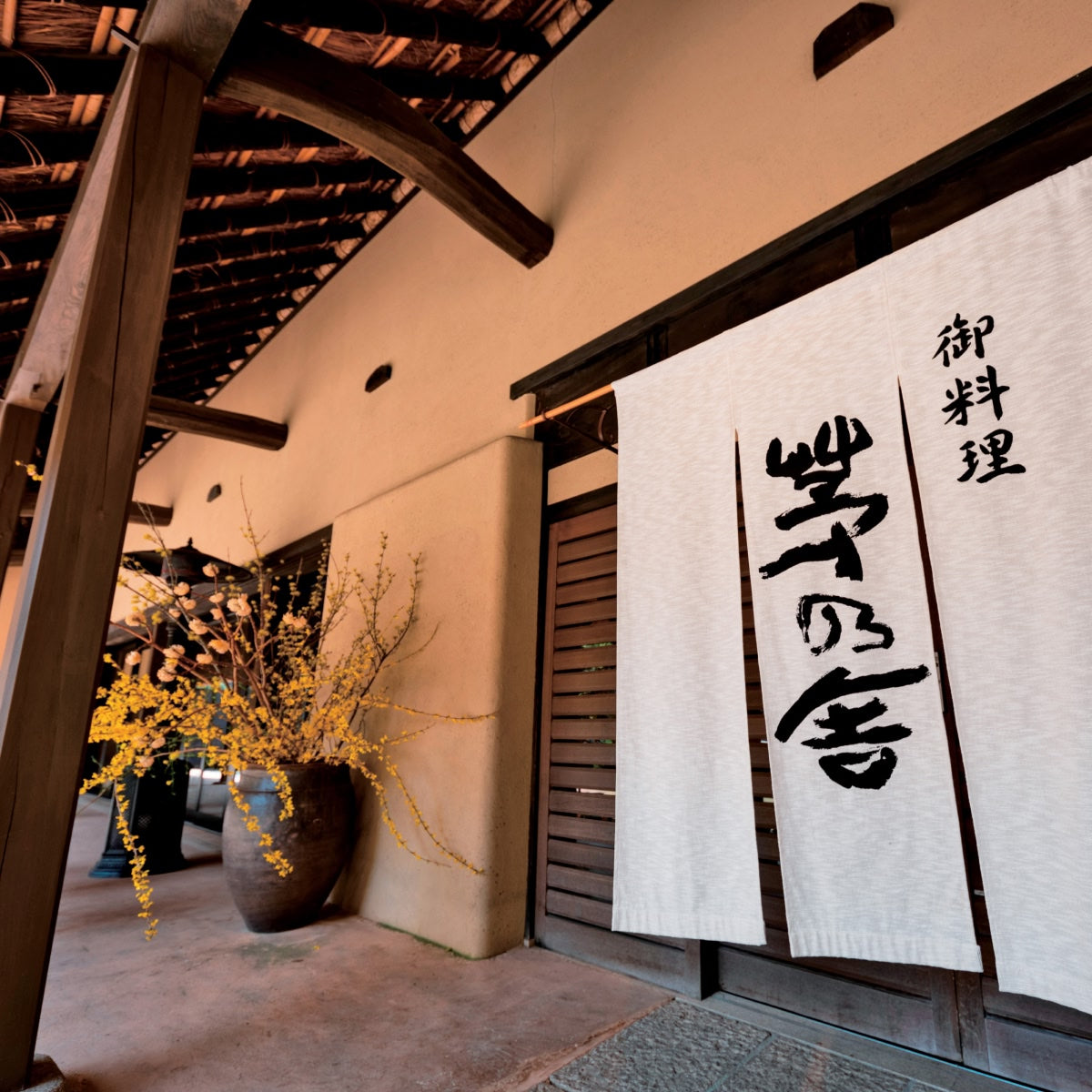











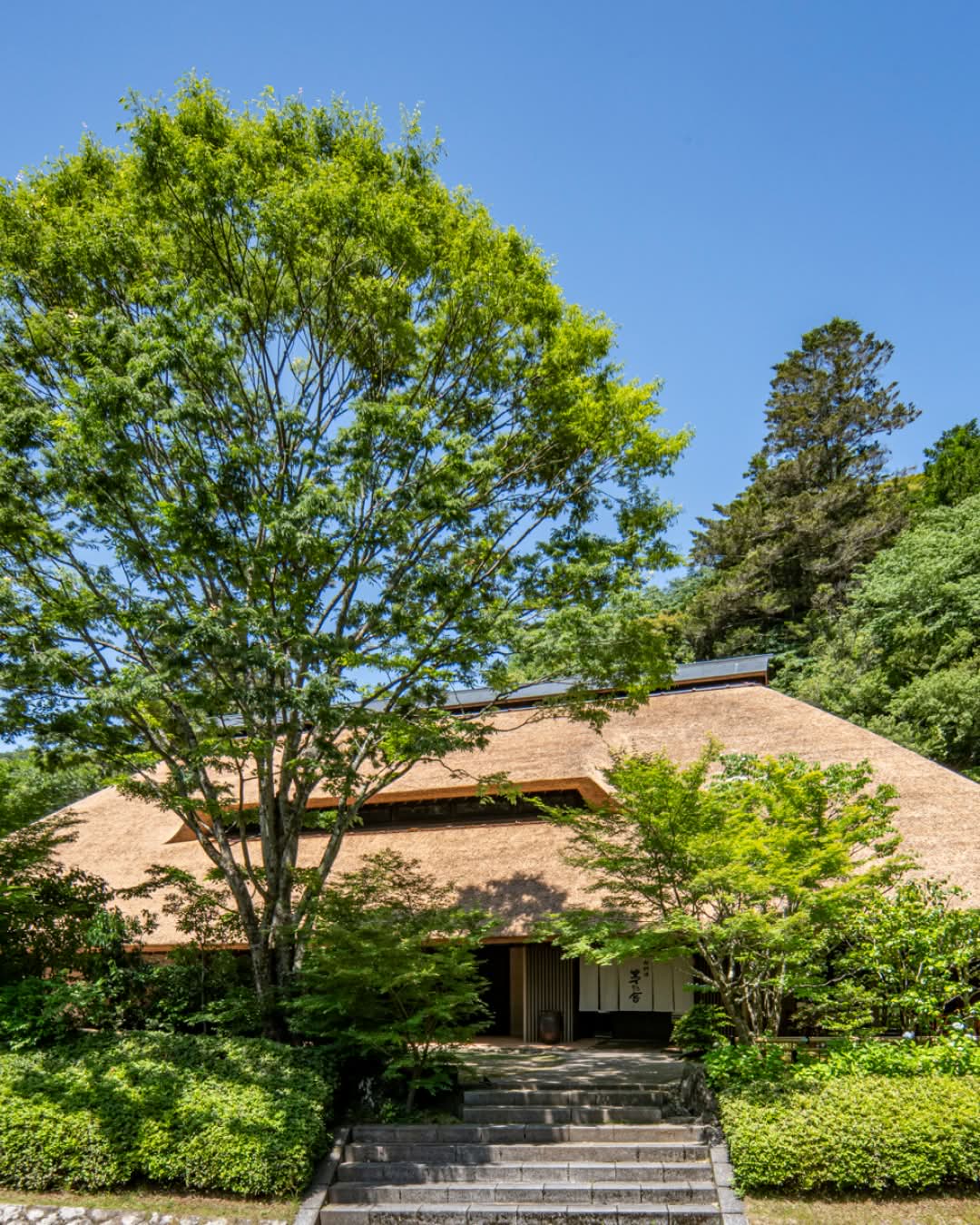

Thatched Roofs: A Familiar Sight in Japan Until the 1960s

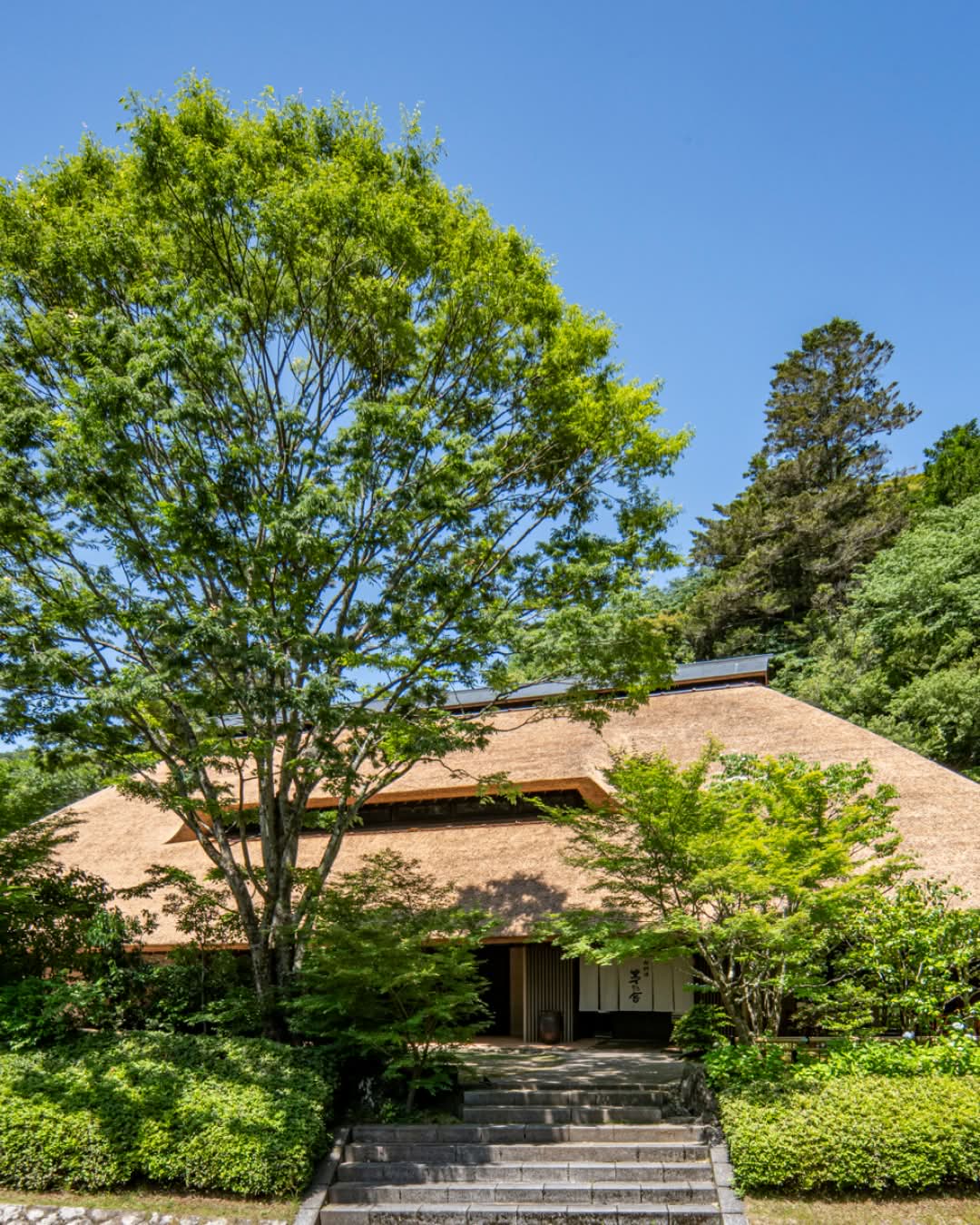
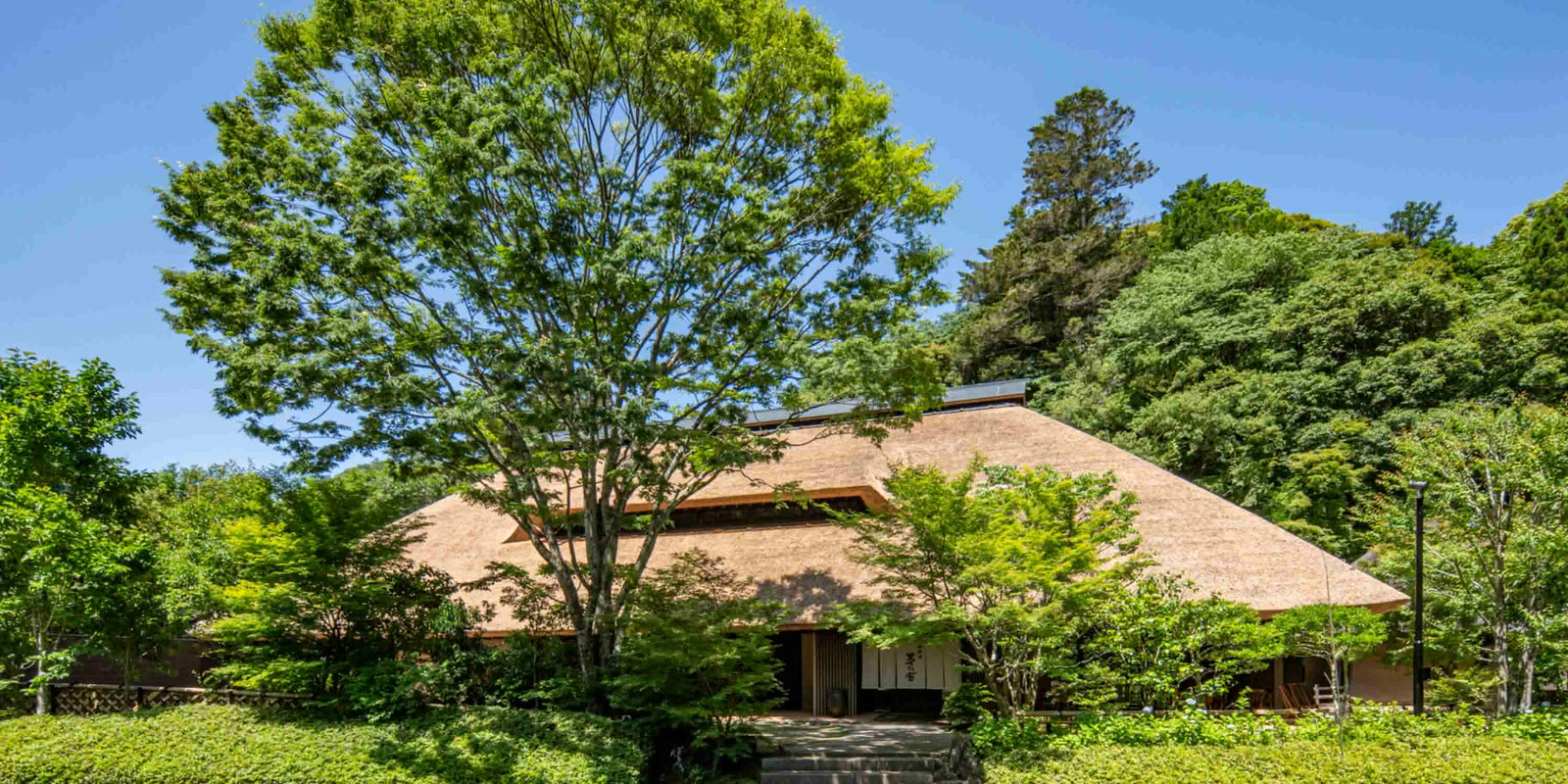
Oryori Kayanoya after the re-thatching was completed in April 2025.
When people think of thatched roofs in Japan, many picture the historic villages of Shirakawa-go in Gifu Prefecture or Miyama in Kyoto. In Kyushu, where Kayanoya is based, the reconstructed dwellings at Yoshinogari Historical Park in Saga Prefecture also feature thatched roofs. These enduring structures show that the tradition of thatched roofs in Japan dates back more than 2,000 years.
A landscape dotted with thatched roofs evokes a nostalgic image of Japan for many people. Yet thatched roofs are found in many parts of the world. In Europe, growing environmental awareness has even led to the construction of new thatched-roof homes. On the Danish island of Laeso, there are even rare roofs thatched with seaweed.

In the past, villages across Japan had skilled thatchers who regularly renewed roofs using materials such as thatch and rice straw. Around the 1960s, however, more practical corrugated metal roofing became the norm, and traditional thatched roofs gradually disappeared from the landscape.
Even so, the craft of thatching has been passed down through generations without being lost. Today, around 200 skilled thatchers continue to practice their craft across Japan.
Kayanoya Began with a Thatched-Roof Restaurant

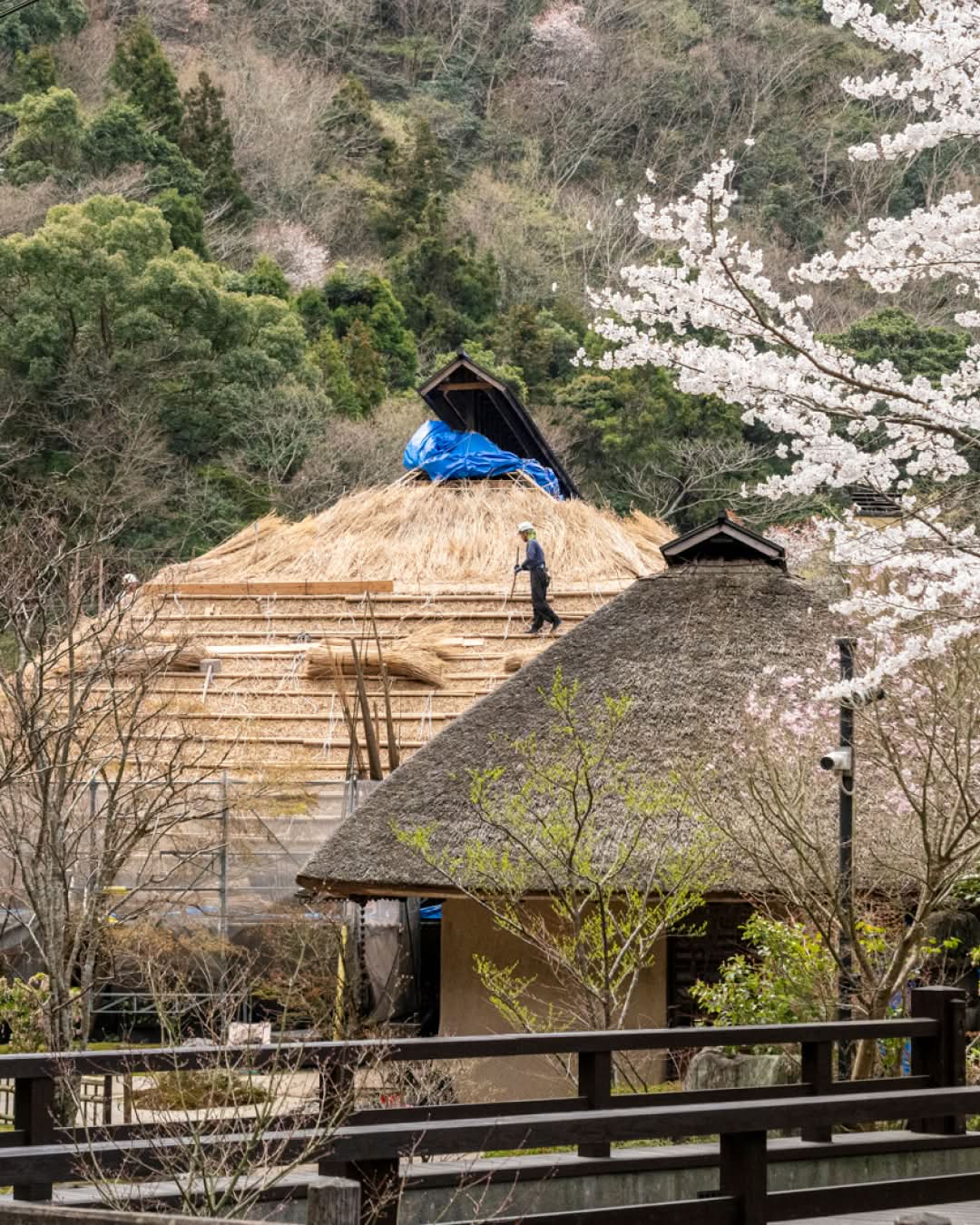
The roof before re-thatching in January 2025. Its impressive scale is immediately apparent.
The thatched roof of Oryori Kayanoya Dining in Hisayama, Fukuoka, where Kayanoya began, covers a building approximately 10,700 square feet (990 square meters) in size—about as large as a school gymnasium. If laid flat, the roof itself would cover roughly 10,800 square feet (1,000 square meters).
Oryori Kayanoya Dining was born in 2003 from an encounter between Kayanoya President Tetsuji Kawabe and master thatcher Yoshihisa Mitoma, chairman of Okuhita Biken. Kawabe happened to visit his maternal family's home just as Mitoma was re-thatching its thatched roof.

The thatched roof of Kawabe's maternal family's home.
Deeply moved by the craftsmanship of thatching and the generations of knowledge behind it, Kawabe shared his vision with Mitoma on the spot. “Both the craft of thatching and the traditions of soy sauce and dashi are part of Japan's cultural heritage, passed down through generations. By sharing our approach to food through a restaurant with a thatched roof, I hope we can help preserve that heritage,” he said.
Two years later, in 2005, Oryori Kayanoya Dining opened its doors. As more guests began saying, “We wish we could enjoy the flavors of Oryori Kayanoya Dining at home,” Kayanoya Dashi was born.
A Three-Year Journey Toward the 2025 Re-Thatching
An old saying about traditional roofing materials goes: “Rice straw lasts three years, wheat straw seven, thatch thirty, and cedar bark fifty.”
However, according to Mitoma, “With today's hotter, more humid climate, thatch will probably last only about 25 years.” With Oryori Kayanoya Dining approaching its 20th anniversary in 2025, plans were set in motion to re-thatch the roof in time for the milestone.

Master thatcher Yoshihisa Mitoma, who was 88 at the time, was still actively practicing his craft.
We were delighted to see him healthy enough to climb onto the roof once again.
The re-thatching required 15,000 bundles of fresh thatch. Even in the grasslands of Aso, where Mitoma has long sourced his thatching material, gathering that much thatch is no small task. It took three years to prepare enough for the project.

Mitoma's hand gently resting on the thatch he laid 20 years ago.
Craftsmanship, Even Where It Can't Be Seen
Originally from Hita, Oita Prefecture, Mitoma once again led the re-thatching project, just as he had when Oryori Kayanoya Dining was first built. After working for a local government office, an agricultural cooperative, and a ranch, he didn't begin training as a thatcher until the age of 48—an unconventional path into the craft.

After founding Okuhita Biken, he devoted himself to the traditional crafts of thatching and cedar bark roofing. Guided by the philosophy of “Creating the Beauty of Traditional Architecture,” he has worked on the roofs of shrines and cultural properties throughout Japan.
His work can also be seen on the residence of the chief priest of Dazaifu Tenmangu (one of Japan's most important Shinto shrines) in Dazaifu, Fukuoka Prefecture; Kamenoi Besso (a renowned traditional ryokan) in Yufuin, Oita Prefecture; the former home of Hirobumi Ito (Japan's first Prime Minister) in Hagi, Yamaguchi Prefecture; and even a pavilion at a zoo in Yokohama, Kanagawa Prefecture.
A humble and sincere man, Mitoma inspires nothing but admiration for the care and precision of his work. “I simply do everything I can before I leave. That's all,” he says. Yet even in the parts that remain unseen—even on the hidden reverse side of the roof—his meticulous craftsmanship reflects the skill and dedication of a true master.

The eaves of a typical thatched roof are about 24 inches deep, while those of Oryori Kayanoya Dining measure approximately 28 inches.
The roof of Oryori Kayanoya Dining is remarkable not only for its size, but also for its deep eaves and sections that reach nearly 40 inches (1 meter) in thickness. Among thatchers across Japan, it is often said, “That must be an incredibly challenging roof to thatch.”
"It's certainly hard work," Mitoma says. "But I always approach each roof with the same care and commitment as the client who entrusted it to me, so I never mind the effort. I hope the craftsmen working alongside me will bring that same mindset to their work."
Young Thatchers and Fellow Craftsmen from Afar Gather Around Mitoma
Okuhita Biken, led by Mitoma, is home to many young craftsmen. When Oryori Kayanoya Dining was first built, one young man watched the thatching work day after day before finally approaching Mitoma with a simple request: “Please take me on as your apprentice.”

“Everywhere I go, young people come up to me wanting to become thatchers,” Mitoma says with a smile. But once they step into the trade, they quickly discover how demanding it is, and many do not stay.
“That's why I'm truly grateful to everyone who chooses to work with us. As the master, I try to look after them, hold back on saying too much, and make sure they can do their best in a positive environment.”

When Oryori Kayanoya Dining was first built, Mitoma, four fellow thatchers, and a group of helpers worked together to thatch its roof. This time, the team had grown to 16, including many younger craftsmen. They came from Oita, Kumamoto, and Saga, with some traveling from as far away as Kyoto Prefecture.

Thatchers gathered from Oita, Kumamoto, Saga, and Kyoto, with traditional skills being passed on to the next generation.
We are grateful if Oryori Kayanoya Dining has been able to play even a small part in passing on the tradition of thatching from Master Mitoma to the next generation of craftsmen.
Roofing with Premium Thatch Harvested from the Grasslands of Aso's Outer Rim

Harvesting thatch in Aso, Kumamoto Prefecture, February 2024.
A thatched roof is the result of many people's efforts, not just those of the thatchers. One of them is Shimako Kaga, who harvests thatch in the grasslands of Aso's outer rim. In preparation for this re-thatching, she spent three years harvesting and carefully storing the thatch needed for the project.
According to Kaga, “The best thatch grows in sunny, windswept areas. We harvest it during the winter, after it has completely dried.” After the thatch is harvested, the grasslands are traditionally burned, allowing new shoots to emerge and grow straight and strong.
Growing the thatch, harvesting it, and burning the grasslands in turn—this cycle preserves the breathtaking beauty of Aso's vast grasslands.

However, the grasslands where thatch is harvested are becoming fewer each year. One reason is the sharp decline in thatched roofs beginning in the late 1950s. Another is that oxen and horses, once essential for farm work, were replaced by mechanized equipment, eliminating the need for pasture. As a result, many former grasslands were planted with cedar and sawtooth oak trees, and the traditional practice of controlled burning came to an end.
That is why the thatch grown in Aso's grasslands is so precious. During this re-thatching, any thatch that was still in good condition was carefully restored and returned to the roof. Even the weathered thatch removed from the outer surface was not discarded—it will be worked into tea fields as a natural fertilizer.
Every gift of nature is used to its fullest, then returned to the earth. Beyond every thatched roof lies a time-honored cycle that has sustained both people and the land for generations.
Where Nature, Thatched Roofs, and Satoyama Cuisine Become One

On April 29, 2025, thanks to the combined efforts of Mitoma and so many others, the re-thatching of the roof at Oryori Kayanoya Dining was completed. As they looked ahead to the grand reopening on June 19, Mitoma reflected:

“The greenery sways in the breeze, the stream gently flows, and birds sing in the trees. In the midst of that mountain landscape stands a thatched roof, alongside the warm hospitality of the people who welcome the guests and the delicious satoyama cuisine they serve. Only when all of these come together does Oryori Kayanoya Dining become complete. That's how I see it.”
Guests come to Oryori Kayanoya Dining seeking a moment away from the busyness of everyday life. “After their meal, I hope they'll look up at the thatched roof and feel something. I hope to keep building roofs that become part of the stories the guests take home with them,” Mitoma says.
Let's all gather here again in 20 years.

Twenty years have passed since Oryori Kayanoya Dining first opened its doors. “Thatched roofs, nourishing satoyama cuisine, and the dashi that Kayanoya holds so dear are all part of Japan's cultural heritage—traditions worth preserving for future generations.” That belief remains unchanged, connecting the past, the present, and the future.
The craftsmen also left us with these reassuring words: “We'll gather again for the next re-thatching in 20 years.” Hearing that, we could see a clear path for the passion and craftsmanship of thatching to be carried forward to future generations.

Beneath the newly thatched roof, where fresh thatch glows a rich golden hue, new seasonal dishes continue to be born. We invite you to visit and savor not only the food, but also the unhurried moments of this special place.
In Part Two, we take a closer look at the masterful work of the thatchers who are carrying the traditional craft of thatching into the future. We hope you'll join us for the next chapter.