


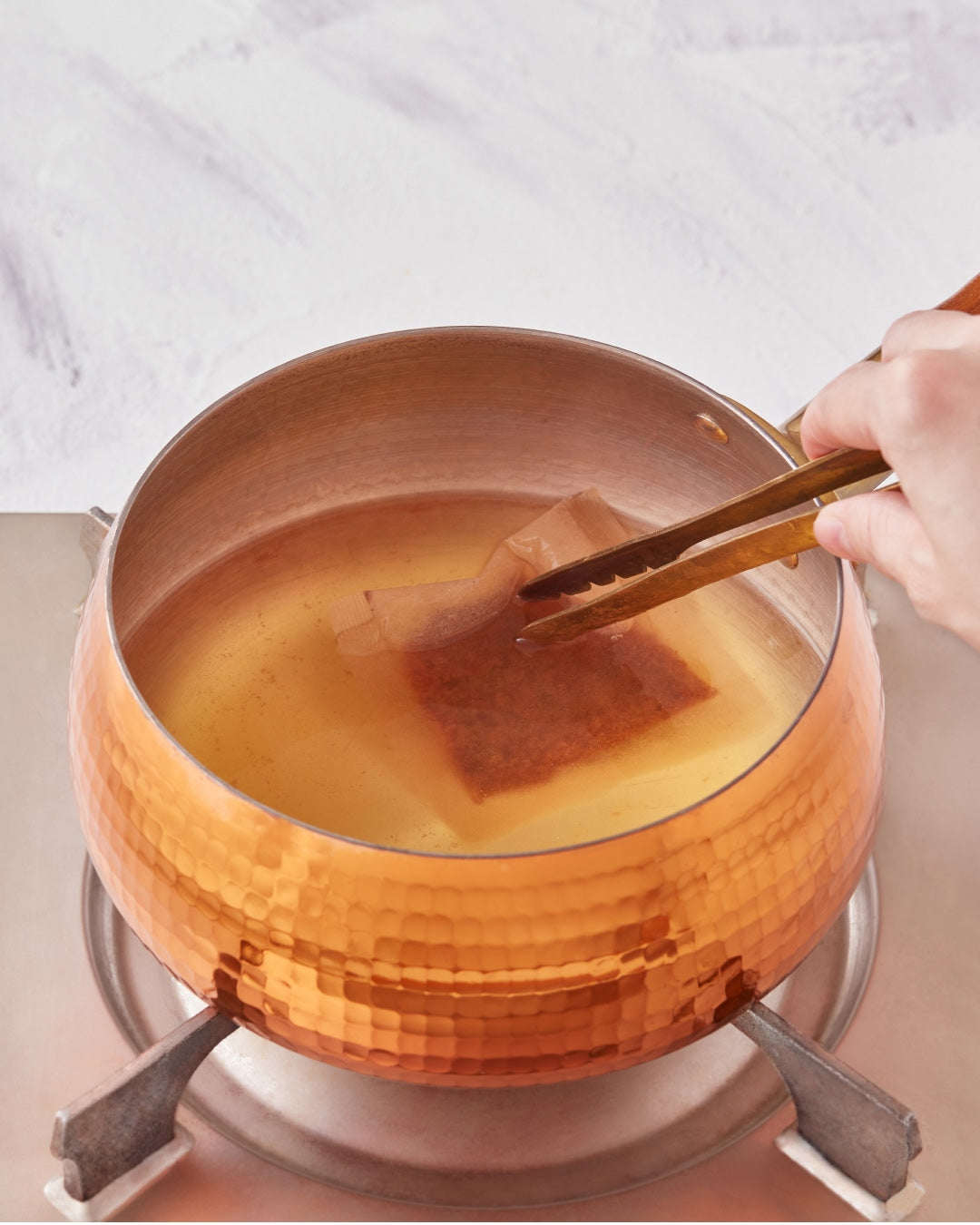
 Making Authentic Dashi Broth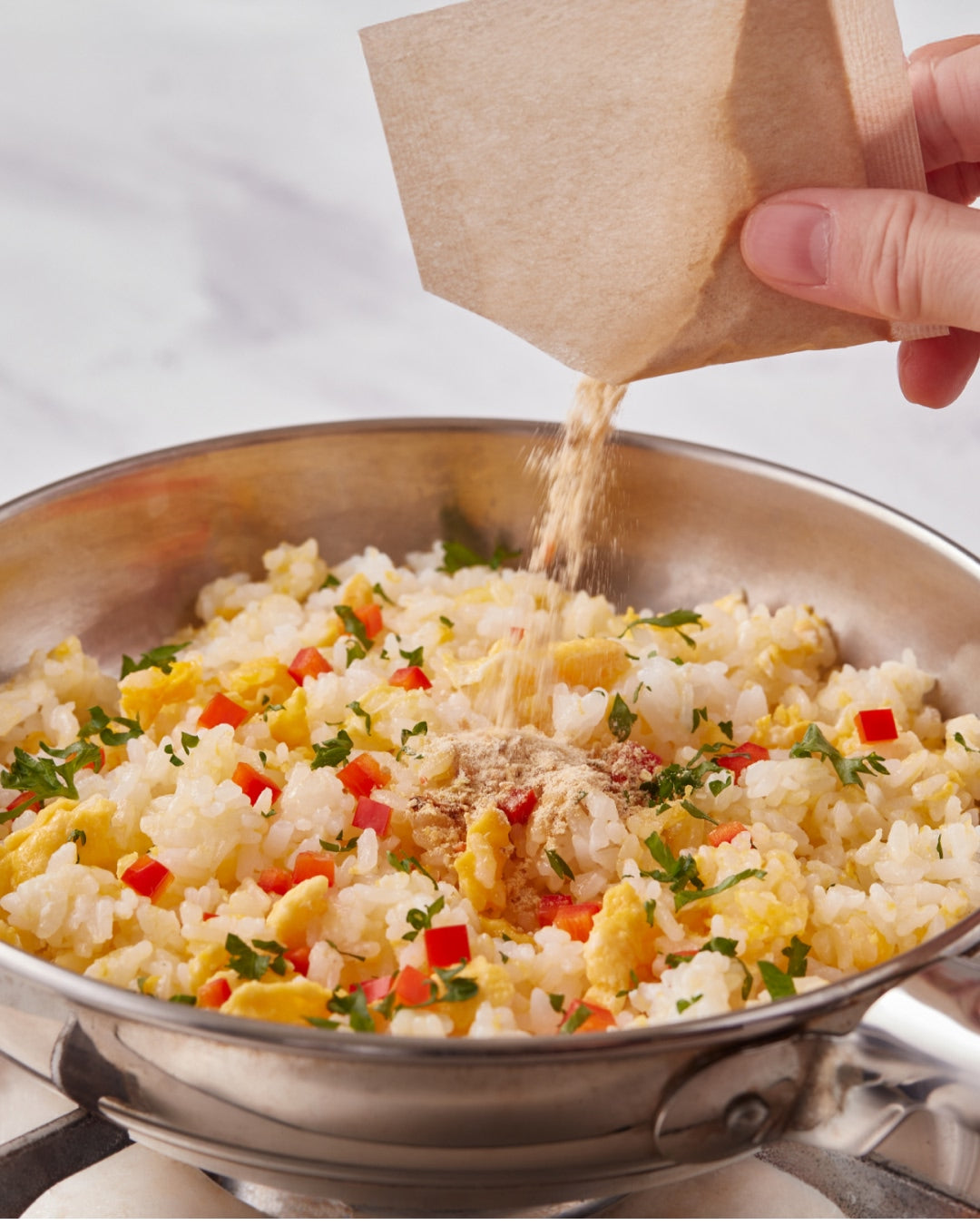
 Cooking with Dashi as a Seasoning


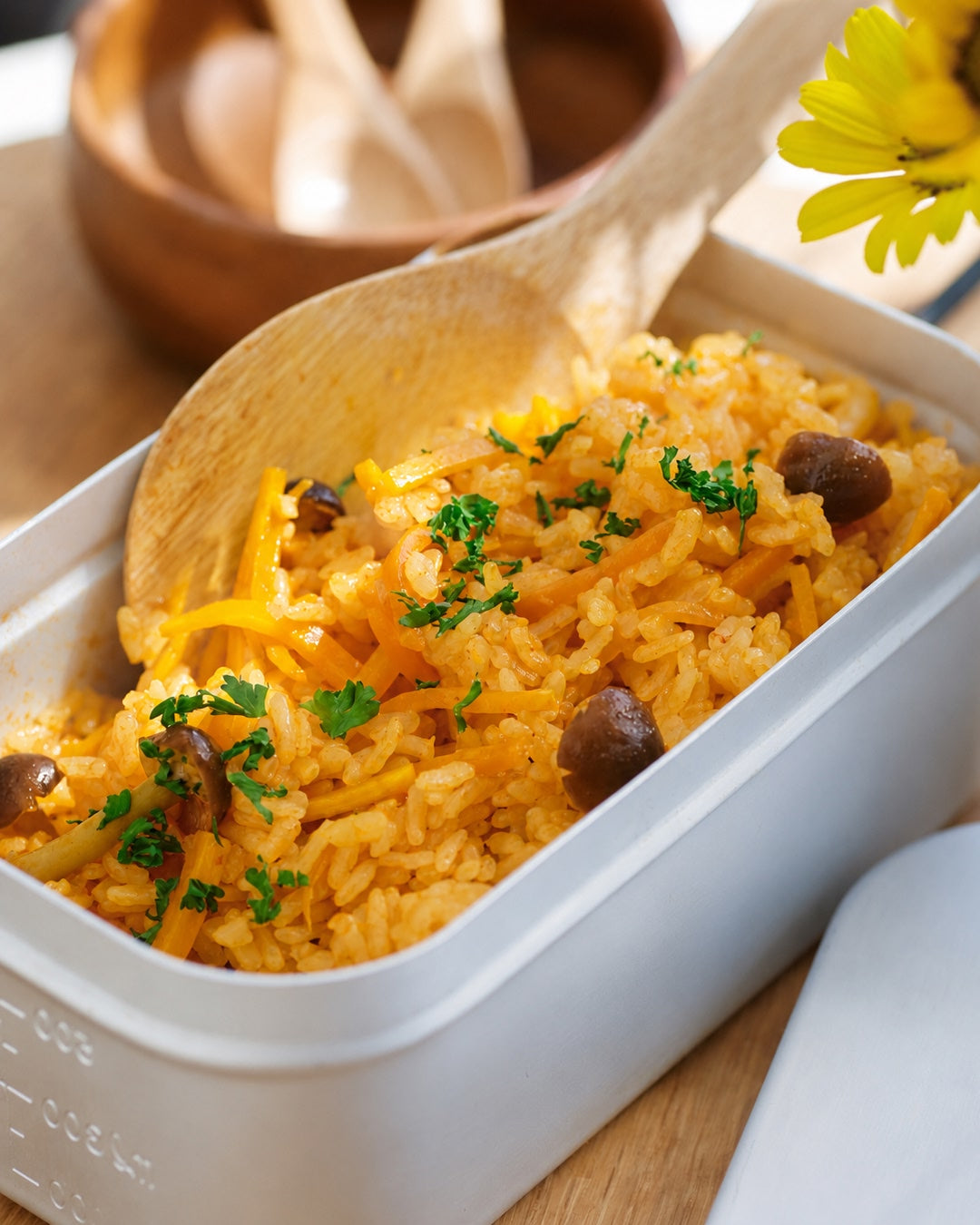
 Colorful Mushroom and Carrot Pilaf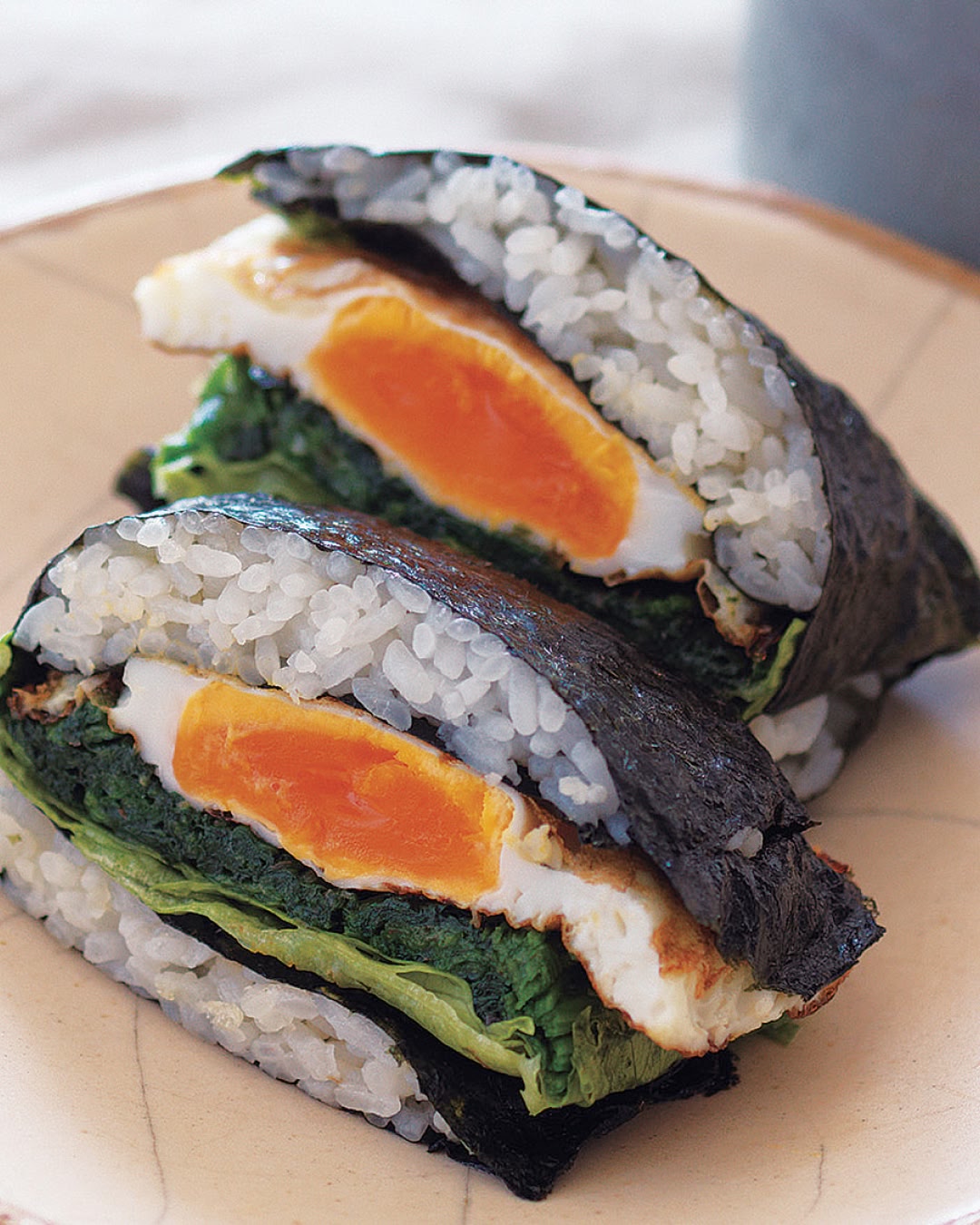
 Dashi Rice and Fried Egg Folded Onigiri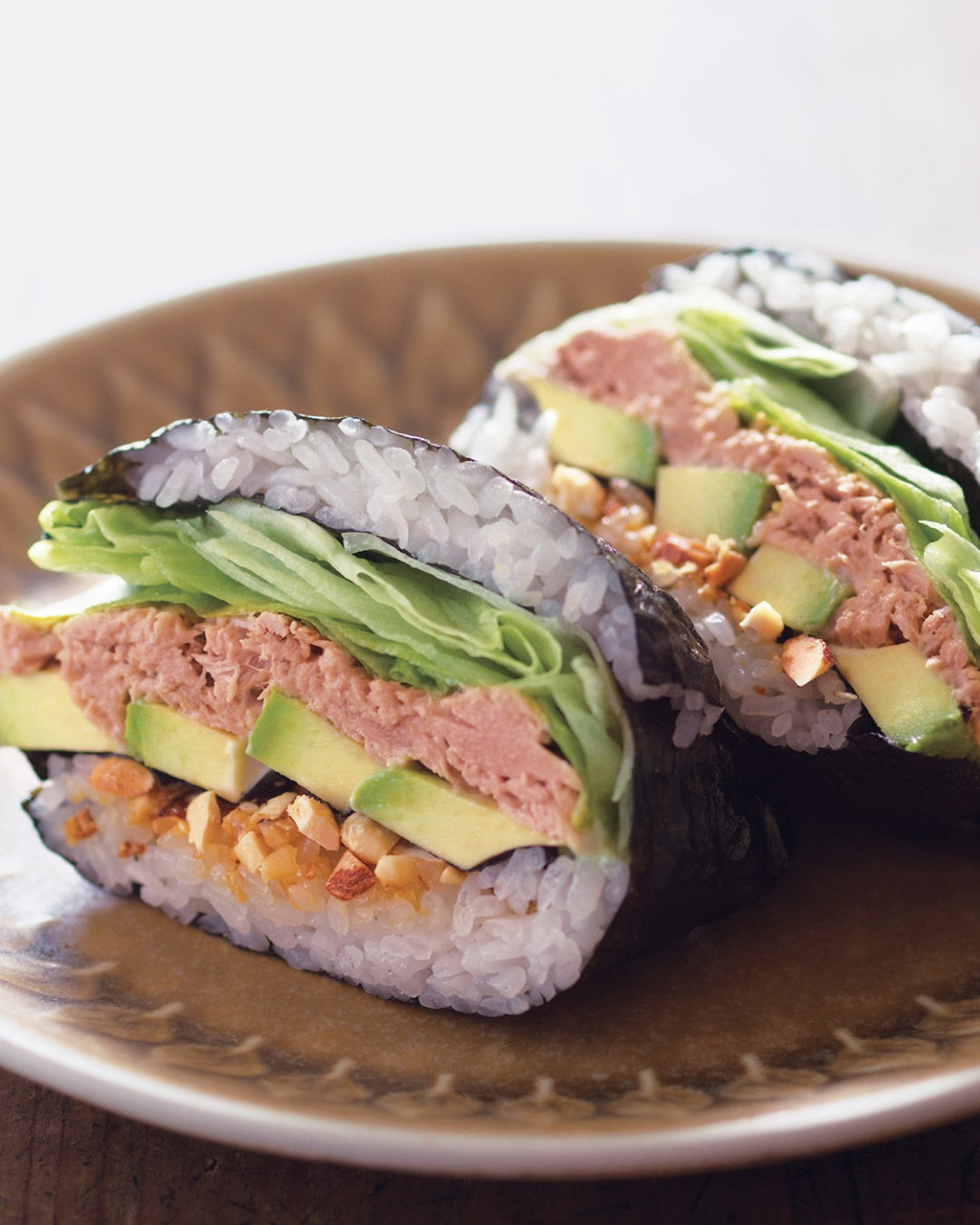
 Tuna and Nuts Folded Onigiri




As the seasons turn, there are moments when a certain taste suddenly comes to mind—someone’s special flavor you once knew.
Hearing “Yes, this is it—this is the taste I’ve been missing” feels like receiving a heartfelt reward.
Recipes that can be made reliably anytime, in any situation—and that you want to keep making once you’ve learned them—we call these “timeless dishes.”
In this series, our recipes are created with three guiding principles:
- Keep the ingredients as simple as possible
- Use dashi and basic seasonings
- Incorporate fundamental Japanese cooking techniques
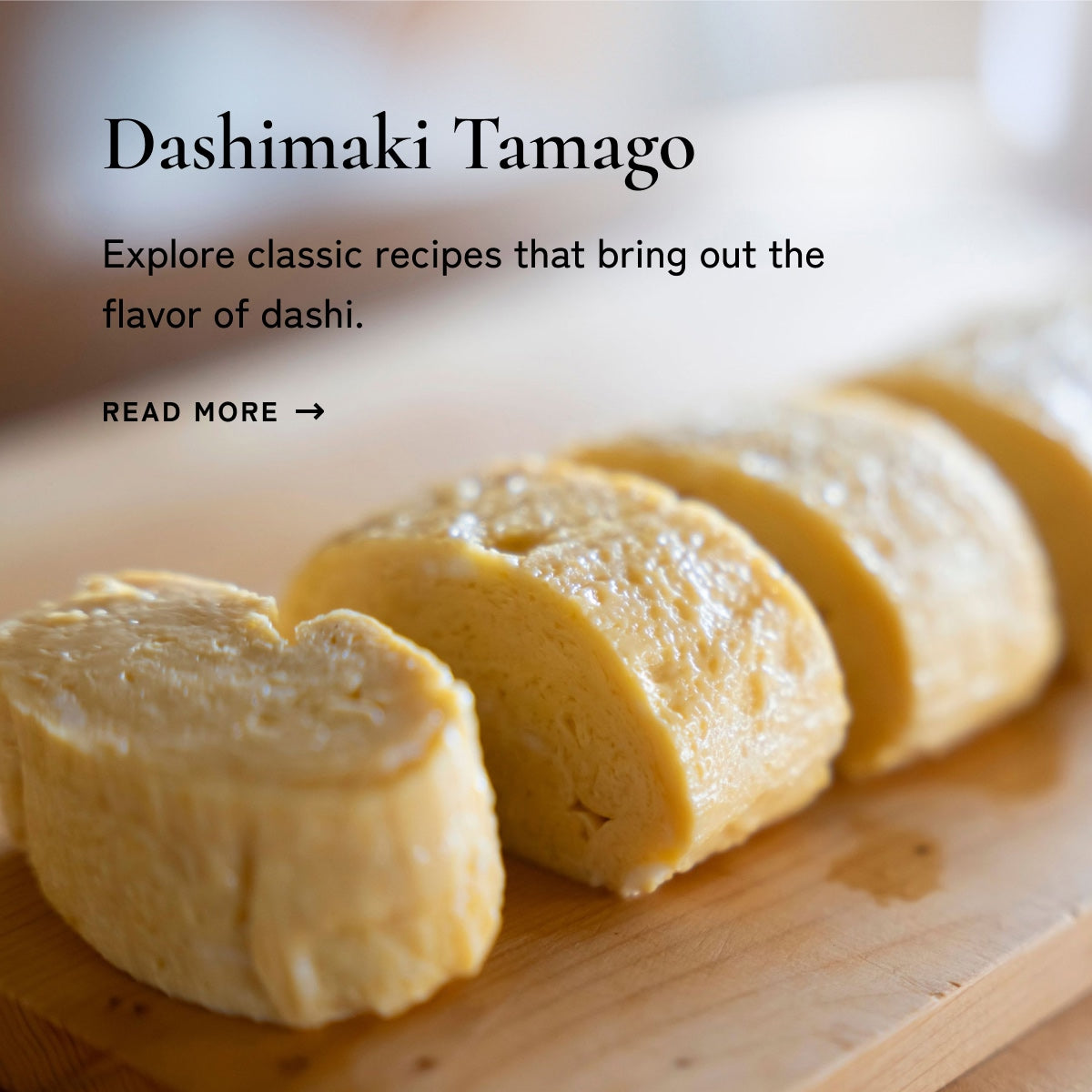
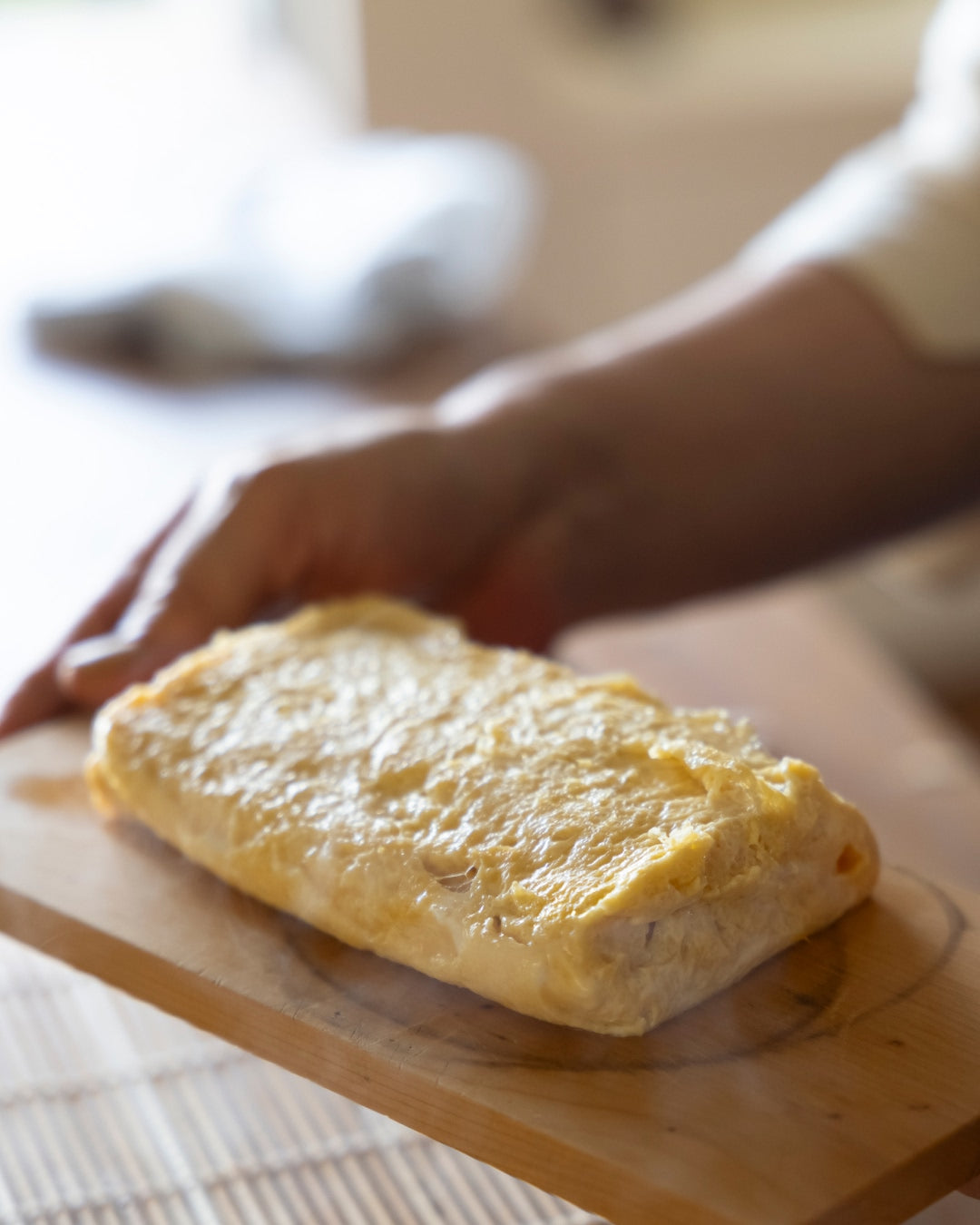
For spring, we’ve chosen Dashimaki Tamago.
When you think of dishes that use plenty of dashi, dashimaki tamago is one of the first that comes to mind.
So soft it almost falls apart when picked up with chopsticks, and when you take a bite, the layers of fluffy egg release a burst of savory dashi flavor—it’s a moment of pure happiness that naturally brings a smile.
However, the more dashi you add, the harder it becomes to roll, and the shape can easily fall apart.
So in this recipe, while aiming for the refined flavor you’d find at a traditional Japanese restaurant, we add a bit of potato starch to the egg mixture to make it easier to roll.
Let’s try making it with Kayanoya dashi.

The key to great dashimaki tamago is to lock in the rich flavor of dashi inside the egg, while creating a soft, light, and fluffy texture.
That said, because it contains a lot of liquid, it can be difficult to roll neatly.
It may lose its shape, or if overcooked, lose that signature fluffiness.
Even professional chefs find dashimaki tamago challenging despite its simplicity—so it’s perfectly normal to find it difficult. Approach it with that in mind.
Steps for Making Dashimaki Tamago
There are two main steps:
- Mix the egg mixture with dashi
- Cook it in a rectangular tamagoyaki pan


Key Points for Making Dashimaki Tamago
- Follow the measurements precisely
- Do not overmix the eggs—leave a bit of structure
- Keep the heat at medium throughout; adjust doneness by moving the pan
Common Mistakes
Adding too much dashi makes it too watery to roll properly. And being overly cautious can lead to overcooking, resulting in a firm texture.
This recipe is designed with the right balance for ease of rolling and a soft finish.
Let’s go through the cooking steps while keeping these tips in mind to ensure the most delicious results.


Ingredients (Serves 2–3)
- 3 eggs
- 0.4 cup (100 ml) Kayanoya dashi (1 packet Kayanoya Original Dashi Stock Powder + 1 ⅔ cups (400 ml) water)
- 1 tsp light soy sauce
- 1 tsp potato starch
- Vegetable oil, as needed
Instructions
- In a pot, combine 1 ⅔ cups (400 ml) water and 1 packet of Kayanoya Original Dashi Stock Powder. Bring to a boil over high heat, then simmer on medium for 2–3 minutes. Cool 0.4 cup (100 ml) of the dashi.
- Crack the eggs into a bowl and lightly beat, cutting through the whites.
- Combine the dashi from step 1 and light soy sauce in a bowl. Dissolve the potato starch in about 2 tsp of the dashi, then mix it into the rest.
- Add the mixture from step 3 to the eggs and gently combine.
- Heat a tamagoyaki pan over medium heat. Add a generous amount of oil, coat evenly, then wipe off excess.
- Pour in 1/5 of the egg mixture and roll. Lightly oil again, then repeat with the remaining mixture in 1/5 portions.
- Cut into bite-sized pieces.
1) Stick to the measurements
Making dashimaki tamago is just like baking sweets—it’s important to stick to the measurements in the recipe.
2) To achieve a light and fluffy texture, don’t overmix the eggs.


Remove the chalaza (the white stringy part of the egg) from the eggs. Then, with the tips of your chopsticks touching the bottom of the bowl, gently cut through the eggs to combine the whites and yolks evenly, being careful not to incorporate air.


Prepare the dashi. Add 1 ⅔ cups (400 ml) of water and 1 packet of Kayanoya Original Dashi Stock Powder to a pot and bring to a boil over high heat. Once boiling, reduce to medium heat and simmer for 2–3 minutes. Measure out 0.4 cup (100 ml) of the dashi and let it cool.
To prevent lumps, dissolve the potato starch in a small amount of dashi (about 2 teaspoons), then mix it into the rest.

Combine the dashi and egg mixture. Again, be careful not to overmix—keep the tips of your chopsticks against the bottom of the bowl and gently cut through the mixture as you stir.
Straining through a sieve will make the mixture smoother, but this step is optional.
3) Keep the heat at medium throughout. Control the doneness by moving the pan.
If you try to adjust the heat using the stove knob, the eggs may overcook while you’re turning it, so keep the heat at medium from start to finish.
Control the doneness by moving the pan closer to or away from the burner.
If you cook too cautiously, dashimaki tamago can easily become overcooked and firm. However, if you understand the key points in advance, there’s no need to rush.


Heat the tamagoyaki pan and coat it evenly with oil. Be sure to grease the sides as well. Pour any excess oil into a small dish.
Now, let’s start cooking.


Pour in one-fifth of the egg mixture. Tilt the pan from side to side to spread it evenly. If any bubbles form, gently pop them with chopsticks.

First round. For the first layer, you’re simply creating the base, so it doesn’t need to be rolled neatly. As you roll the egg from the far side toward you, quickly lift the far edge of the pan to help turn it smoothly.


Once the base layer is rolled, lightly oil the entire pan again.
First, apply oil to the far side of the pan. Move the rolled egg to the far side, then evenly coat the near side with oil as well.


Second round. Pour in another one-fifth of the egg mixture.
Lift the rolled egg with chopsticks and spread the mixture underneath it as well. Once the egg is partially set, roll it from the far side toward you as before.
If it’s difficult to roll with chopsticks, using a spatula can make it easier.


Repeat the same process for the third and fourth rounds.
Be sure to keep the pan lightly oiled so the egg mixture doesn’t stick.


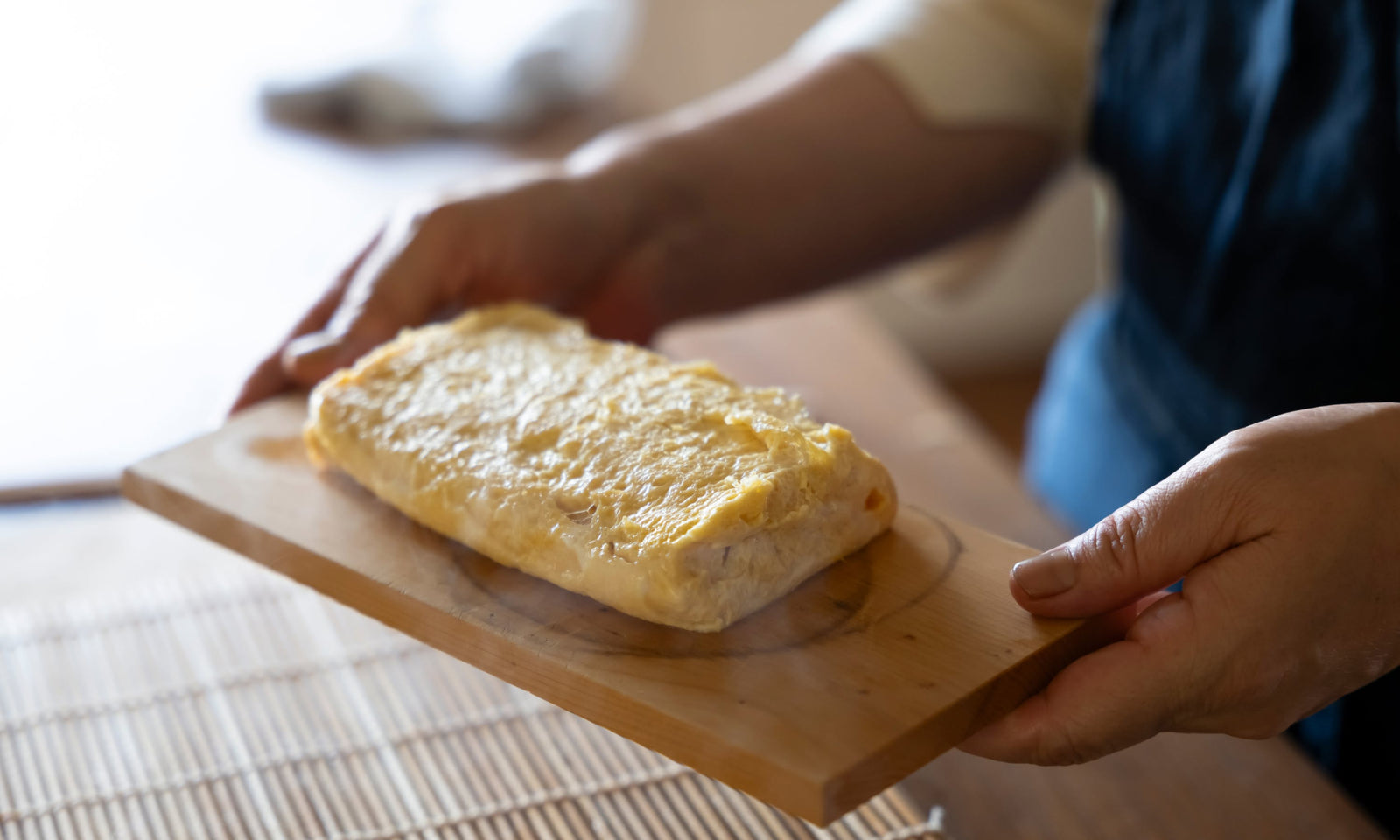
Your Timeless Japanese dish, Dashimaki Tamago, is now complete.


Serve hot with grated daikon radish.
Its gentle, dashi-rich flavor makes it a versatile dish—perfect as a side, in bento, or as a great accompaniment to drinks.
Tip 1: If the pan gets too hot…


If the pan gets too hot, let it cool on a damp cloth.
It’s a good idea to keep one nearby next to the stove.
Tip 2: To prevent odors from transferring to the egg...


Egg dishes are very delicate, so turn the omelet out onto a clean cutting board to prevent it from picking up unwanted odors.
A clean wooden lid (such as one used for sweets) can also be used as an alternative.
Tip 3: For a more beautiful finish, use a bamboo rolling mat.


Even if the shape has collapsed, you can achieve a refined finish by using a bamboo rolling mat.
When shaping with the mat, avoid pressing too firmly—roll it so the corners become gently rounded, and leave it as is until it has cooled slightly.

Extra: Edomae Atsuyaki Tamago (Edo-Style Thick Omelet)


Edomae atsuyaki tamago made with kanro dashi is characterized by a generous amount of sugar, which envelops the rich dashi flavor.
Compared to Kyoto-style dashimaki tamago, many people find it quite sweet, so if you prefer a milder sweetness, try reducing the amount of sugar. It is also typically cooked to develop a golden color and rolled into a thicker shape.
It’s fascinating how, despite using similar ingredients, dashimaki tamago and Edomae atsuyaki tamago turn out to be completely different dishes.
Ingredients (Serves 2-3)
- 3 eggs
- Kanro Dashi [A]
- 0.2 cup (50 ml) Kayanoya Dashi (1 packet Kayanoya Original Dashi Stock Powder + 1 ⅔ cups (400 ml) water)
- 4 tbsp sugar
- 1 tsp soy sauce
- 2 tbsp sake
- Vegetable oil, as needed
Instructions
- In a pot, combine 1 ⅔ cups (400 ml) water and 1 packet of Kayanoya Original Dashi Stock Powder. Bring to a boil over high heat, then simmer on medium for 2–3 minutes. Cool 0.2 cup (50 ml) of the dashi.
- Add all ingredients of [A] to a pot and heat gently until the sugar dissolves. Remove from heat and let cool.
- Crack the eggs into a bowl and lightly beat them, then add the mixture from step 2.
- Heat a tamagoyaki pan over medium heat. Add a generous amount of oil, coat evenly, then wipe off excess.
- Pour in one-fifth of the egg mixture and fold it in half. Lightly oil the pan again, then add another one-fifth of the mixture and cook, folding it in half. Repeat this process until all the mixture is used.
- Cut into bite-sized pieces.
Recipe Creator
“Spring is a season that calls for gentle flavors and dishes that highlight the natural taste of ingredients.
Dashimaki tamago, with its delicate egg flavor enhanced by dashi, is a dish that allows you to fully appreciate its taste with minimal seasoning. Using Kayanoya Ultra-Premium Dashi Stock Powder is also highly recommended.
If you’re entertaining guests, you can prepare the ingredients in advance and cook it fresh to serve.”


Yoko Yamada – Food Stylist
Active contributor to Kayanoya’s quarterly magazine Temahima. Holds the title of Professor in Edo Kaiseki Kinsaryu cuisine. With deep knowledge and skill in Japanese culinary techniques and etiquette, she creates recipes that are approachable for home cooks while maintaining the beauty and delicate flavors of Japanese cooking.